
Most "composite vs. wood" articles are written as if every backyard in the country ages the same way. It doesn't. What breaks down a deck in Alpharetta isn't the same thing that breaks down a deck somewhere with salt spray rolling off the water — here, it's humidity and UV, not salt air, that do the aging. That distinction changes which upgrades are actually worth paying for, so this comparison is built around our specific stretch of North Fulton County rather than a generic national answer.
Georgia's Climate, Board by Board
Four things work on a deck surface here every year: a hot, humid summer that keeps moisture in the air for months at a time; a genuinely heavy spring pollen season, when a yellow film of pine pollen coats every horizontal surface for weeks; strong, direct UV exposure from long summer days; and, less often but still real, a winter ice event or hard freeze that stresses joints and fasteners. None of that is salt-air corrosion or hurricane-driven rot — it's a cycle of swelling, drying, UV bleaching, and the occasional freeze that repeats every year.
How Wood Ages Under Those Conditions
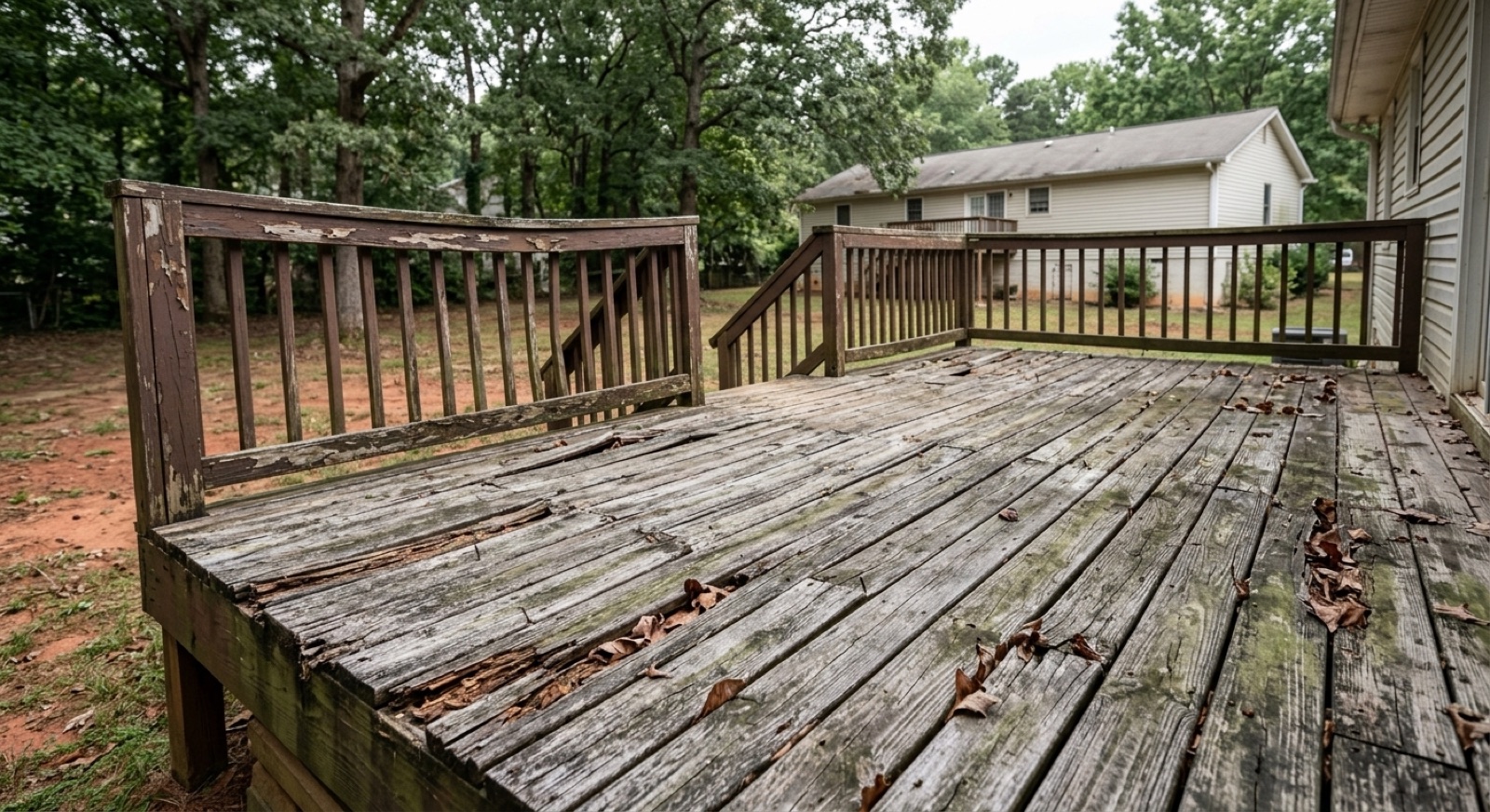
Pressure-treated wood handles Georgia's climate fine structurally — the ground-contact rating and proper flashing matter more than the wood species. Where wood shows its age fastest is cosmetically: UV bleaches the surface gray within a season or two if it isn't sealed, humidity swells the grain and can raise splinters, and pollen season leaves a sticky residue that needs washing off before it stains. None of this is dangerous, but it does mean a wood deck here realistically needs cleaning and resealing every 12 to 18 months to keep its color and stay smooth underfoot, which is the maintenance rhythm we lay out in full on our custom wood decks page.
How Composite Ages Under the Same Conditions
Capped composite boards are engineered around exactly this kind of exposure — a polymer shell resists UV fading far longer than a stained wood surface, and the material doesn't swell or splinter with humidity swings the way wood grain does. Pollen still lands on composite the same way it lands on everything else, but it rinses off a smooth cap surface easier than it scrubs out of open wood grain, which we cover step-by-step in our composite maintenance routine. Composite also shrugs off the occasional ice event without the freeze-thaw checking that can eventually crack wood fibers. See our composite and Trex decks page for the build side of this.
The 15-Year Math
Upfront, pressure-treated wood almost always costs less — see our full deck cost breakdown for current numbers. But stretch the comparison to 15 years and add up sealing, board replacement, and touch-up labor on wood versus the higher purchase price of composite, and the gap narrows substantially, sometimes disappearing entirely depending on the brand tier you choose — a topic we go deep on in our Trex, TimberTech, and budget composite guide.
Not Sure Which Material Fits Your Yard?
We'll walk you through both options for your specific project, budget, and how long you plan to own the home.
📞 Call 470-327-9145One More Georgia-Specific Factor: Freeze-Thaw
North Fulton County doesn't see harsh winters, but it does see enough freeze-thaw cycling most years to matter over a decade-plus timeframe. Water that gets into a check or crack in wood decking and then freezes can widen that crack slightly each time it happens, which is part of why wood surfaces eventually need more than just cosmetic resealing. Composite's non-porous cap doesn't absorb water the same way, so it isn't subject to that same freeze-thaw expansion at the surface — one more reason composite tends to need less structural attention over the long run here, even though our winters are mild by national standards.
So Which Should You Pick?
If you plan to sell within a few years or want the lowest possible upfront cost, pressure-treated wood remains a smart choice as long as you're realistic about the resealing schedule. If you're building for the long haul, want to spend more time actually using the deck instead of maintaining it, or you're tired of a pollen-season scrub every April, composite tends to win on a true 15-year basis. Either way, the decision should be based on Georgia's actual climate cycle, not a national average that assumes a coastline that isn't here.